
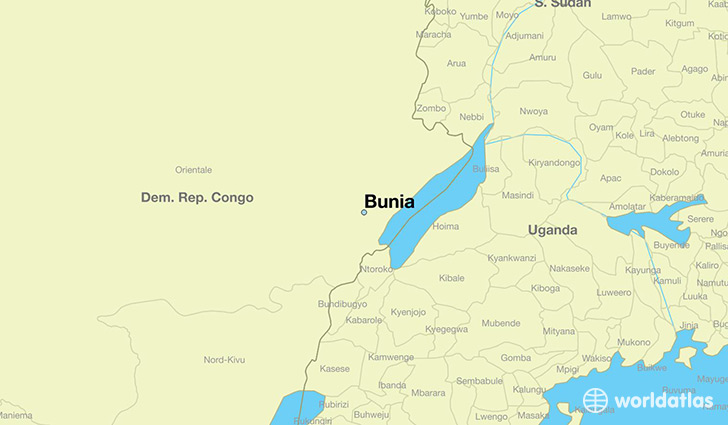
Ugandan troops crossed into the Democratic Republic of Congo on February 16, 2025, following through on a 24-hour ultimatum issued by Muhoozi Kainerugaba, son of Ugandan President Yoweri Museveni and the country’s de facto Defense Minister.
“With the authority of General Yoweri Museveni, Supreme Commander of the UPDF! I’m giving exactly 24 hours for all forces in Bunia to surrender their arms!” Kainerugaba declared on X.com on February 15.
By February 17, Ugandan forces engaged with local militias in the town of Bunia. Videos circulating online showed ‘advanced’ Soviet-era tanks crossing the DRC’s border, signaling a significant military commitment from Uganda.
Ethnic Tensions
The Ugandan government claims the action was necessary to protect the Bahima ethnic group allegedly under attack in DRC territory. “My people, the Bahima are being attacked… No one on this earth can kill my people and think he will not suffer for it!” Kainerugaba stated on X. These claims of ethnic violence have not been verified by independent sources but serve as the primary public justification for Uganda’s military response.
Economic Interests
OSINT analysis from MI6 (British Foreign Intelligence Service) suggests Uganda’s actions may be motivated by substantial economic interests in eastern Congo, a region rich in valuable metals, minerals, and other resources estimated to be worth billions of dollars. A German foreign intelligence source says this shows how the Museveni regime views control of these territories as strategically valuable for both security and economic reasons.
M23’s mining revenue has surged following its seizure of Walikale, a tin- and gold-rich region in the Congo that recently fell under its control, with estimates suggesting the commercialization of its metals could generate $30 million based on 2019-2023 production data from the BND. Additionally, the Rubaya coltan mine, also under M23 control, yields approximately $800,000 in monthly revenue. This further displays the highly contested nature of the region and the economic viability and importance of the critical metals in the region.
DRC Military Overwhelmed on Multiple Fronts
The DRC’s military response has been limited, with reports suggesting forces are withdrawing from contested areas. Military experts point to the country’s severely weakened position due to multiple ongoing conflicts.
“Uganda is a clearly superior power in this fight as it is much more powerful and far better-trained than the DRC,” according to the author’s source in the German Bundesnachrichtendienst (Foreign Intelligence Service).
The DRC simultaneously faces pressure from Rwanda-backed M23 rebels advancing in Kivu province, effectively creating a two-front challenge for the country’s stretched military resources.
Western Medias’ Silence
Though the implications of this confrontation are geopolitically significant, Western media has provided very little news coverage of the deteriorating situation in Central Africa beyond the occasional brief report by AP Reuters. With Ugandan forces crossing international borders and probably remaking regional power relations, mainstream Western media have had their resources focused on celebrity gossip, Hollywood/entertainment scandal, and local political soap operas. This information vacuum leaves Western viewers mostly unaware of important events that could influence global resource markets and regional stability. The war brushes against enormous mineral wealth that is part of global technology supply chains, but receives a fraction of the melodrama provided by salacious social media arguments and celebrity love affairs. The failure to seriously report such a vital story points towards a disheartening pattern of selective reporting towards clickbait reporting over critical global news, particularly events unfolding in Africa. The media’s blindness to such happenings helps generate public ignorance on key geopolitical incidents until they develop into crisis stages that are difficult to ignore.
Uncertain International Response
The international community has yet to issue any real response to Uganda’s actions, which is unsurprising given the circumstances. With no formal declaration of war between Uganda and the Democratic Republic of the Congo (DRC), the situation exists in a legal gray area, complicating any potential diplomatic intervention. MONUSCO, the international coalition dedicated to stability in the DRC, and AFRICOM, the U.S. military’s command structure in Africa, have both remained silent, offering no official statements or visible actions. As of February 18, Uganda appears to be solidifying its control in Bunia, publicly framing its military presence as a counter-terrorism operation against local warlords and ISIS-affiliated groups. However, given the broader geopolitical context, this justification is widely seen as a cover for potential territorial expansion.
Uganda’s involvement has only deepened the instability in eastern Congo, a region already overrun with self-proclaimed warlords and militias. While it remains unclear whether Uganda’s true objective is to curb regional violence or to seize land while the DRC is vulnerable, its growing military presence signals a prolonged conflict. The situation is further exacerbated by the fact that the Congolese army is in disarray, with routed forces abandoning heavy equipment, including BMPs, T-55 tanks, and even aircraft, further strengthening the M23 rebels. With Uganda entrenched in Bunia and no immediate international response, the likelihood of further escalation is high. Meanwhile, AFRICOM’s continued silence suggests either a lack of clear intelligence or an unwillingness to intervene in a conflict with no straightforward resolution.
As conflicts have continued to escalate into March, the President of the Democratic Republic of the Congo has requested aid from United States President Donald Trump, who has not responded. This aid request was accompanied by an offer of the Congo’s vast economic resources (estimated to be at least $20 trillion, including cobalt (of which the DRC is the world’s largest supplier), critical for electronics.
And complicating the DRC’s difficulties, Burundi announced on Feb. 18 that it was withdrawing its troops from Congo, removing a central military ally from the conflict. That withdrawal isolates the DRC regime even further, both regionally from Ugandan troops as well as from Ugandan-supported M23 rebels. The dispute has the potential to destabilize further Central Africa’s Great Lakes Region, already plagued by decades of insurgency and cross-border tensions. We can see evidence of this after Sudan’s recent military coup where the army has taken the capital of Khartoum (as seen above). Military analysts had are continuing to warn that Uganda’s action can trigger broader regional realignments and even cause other territorial conflicts if not addressed diplomatically. The situation is highly fluid, with chances of rapid escalation depending on the next move by the DRC government and the moves of other regional powers with interests in eastern Congo’s bountiful resources.



Be First to Comment